
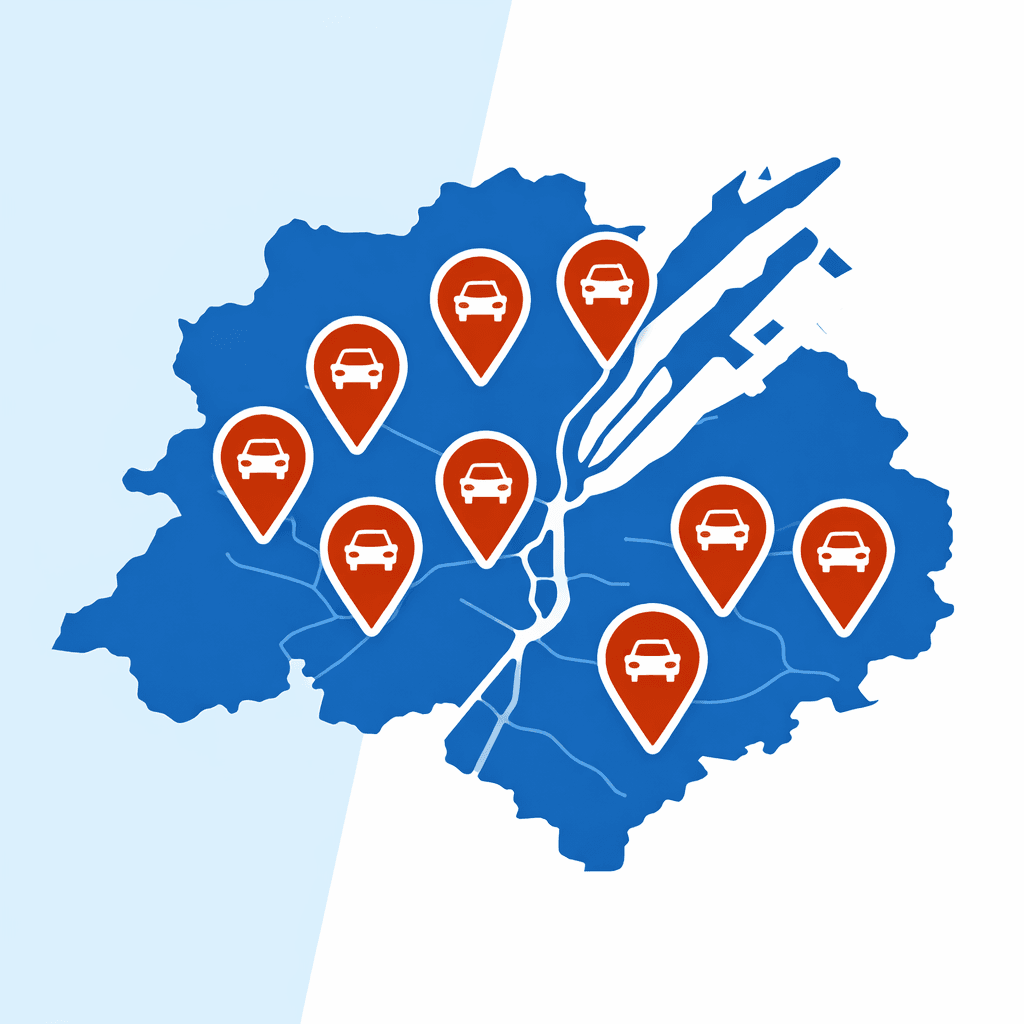
Not all breakdowns happen randomly.
After years of real-world callouts across Belfast and surrounding areas, clear patterns emerge. Certain roads, junctions, and driving conditions consistently produce higher breakdown rates — regardless of vehicle age or brand.
This page isn’t about scare tactics or selling repairs.
It exists to document where breakdowns actually happen in Belfast, why they happen, and what drivers should realistically expect when they do.
This kind of ground-level knowledge is what separates generic recovery firms from experienced local operators like NI Car Recovery.
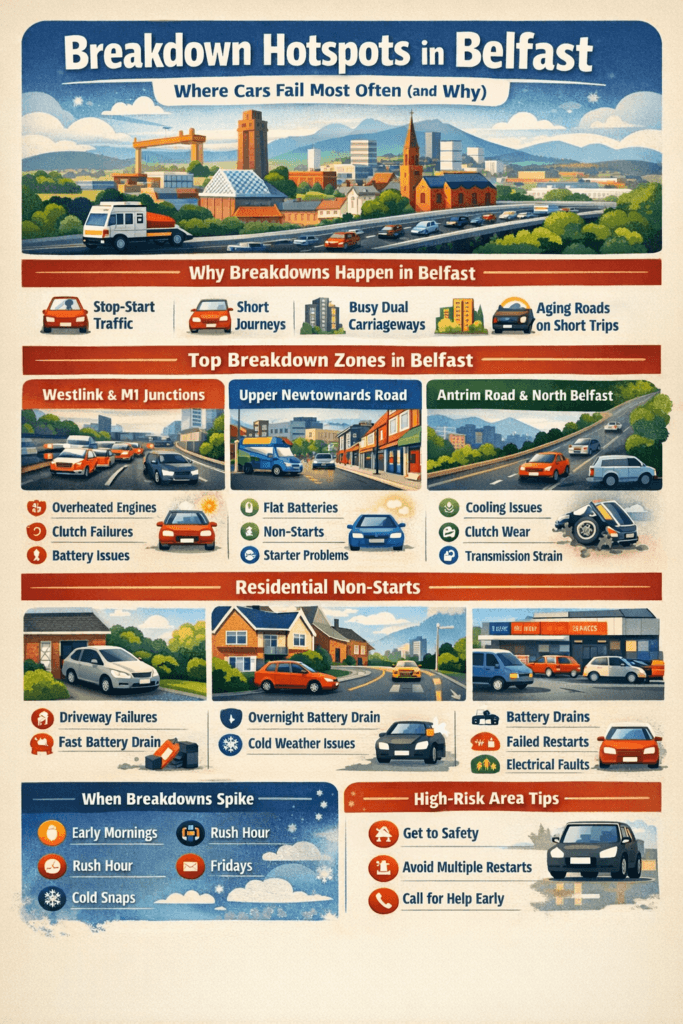
Why “Breakdown Hotspots” Exist in Belfast
Belfast has a unique combination of factors that increase breakdown likelihood:
- Stop–start urban traffic
- Short journeys that never fully warm engines
- Heavy use of dual carriageways feeding into tight city bottlenecks
- Ageing road surfaces in older residential areas
- A high percentage of diesel vehicles used for short trips
The result? Mechanical stress builds quietly — until it doesn’t.
The Most Common Breakdown Zones in Belfast
1 – Westlink & M1 Entry / Exit Points
The Westlink and M1 corridors are among the highest-stress driving environments in the city.
- Typical causes here include:
- Overheated engines after prolonged idling
- Clutch failure in stop–start traffic
- Sudden battery or alternator failure
- Vehicles stalling after crawling traffic clears
- Breakdowns here feel more urgent due to traffic speed changes, but many are the result of slow damage accumulated earlier in the journey.
2 – Upper Newtownards Road & East Belfast Arterials
East Belfast sees a high volume of short urban journeys, especially during school runs and commuting hours.
Common failures include:
- Flat or weakened batteries
- Non-start situations after short stops
- Starter motor issues
- Engine warning lights triggered by repeated cold starts
Many vehicles that break down here were technically “fine” the day before.
- Antrim Road & North Belfast Gradients
Long gradients combined with congestion place strain on:
- Cooling systems
- Clutches
- Automatic transmissions
Older vehicles, vans, and taxis are particularly vulnerable in this area, especially during warmer months or peak traffic periods.
- Retail Parks & Car Parks (Hidden Hotspots)
Some of the most frequent callouts happen after drivers return to their vehicle, not while driving.
Typical scenarios:
- Battery drains while parked
- Vehicles failing to restart after short shopping trips
- Electrical faults surfacing once the engine cools
These locations feel low-risk — but generate consistent recovery demand.
5. Residential Areas & Driveway Non-Starts
- Across Belfast suburbs, a large percentage of callouts involve:
- Cars failing to start on driveways
- Vehicles parked overnight after short journeys
- Flat batteries following cold weather or inactivity
Not all breakdowns happen on the road.
Across Belfast suburbs, a large percentage of callouts involve:
These situations are often less dramatic — but no less disruptive.
6. Why Modern Cars Break Down “Unexpectedly”
One of the biggest misconceptions is that newer cars are immune to breakdowns.
In reality:
- Modern vehicles rely heavily on electronics
- Batteries degrade faster due to constant background systems
- Warning lights often appear after failure, not before
- Many drivers are caught off-guard because there were no obvious warning signs.
7. Timing Patterns: When Breakdowns Spike
Breakdowns in Belfast tend to cluster around:
Early mornings (cold starts)
Late afternoons (traffic congestion)
Fridays (longer journeys after short-week driving)
Cold snaps and sudden weather changes
These patterns reinforce that breakdowns are rarely random.
What Experienced Recovery Operators Notice (That Others Miss)
From a recovery perspective, repeated callouts tell a story.
Vehicles breaking down in the same locations often share:
Similar journey lengths
Similar usage patterns
Similar types of mechanical stress
This is why local experience matters more than generic advice.
What To Do If You Break Down in a High-Risk Area
If your vehicle fails in traffic-heavy zones:
Get to a safe position if possible
Avoid repeated restart attempts (this can worsen faults)
Call for assistance early — delays compound problems
Early intervention often prevents minor faults becoming major repairs.