
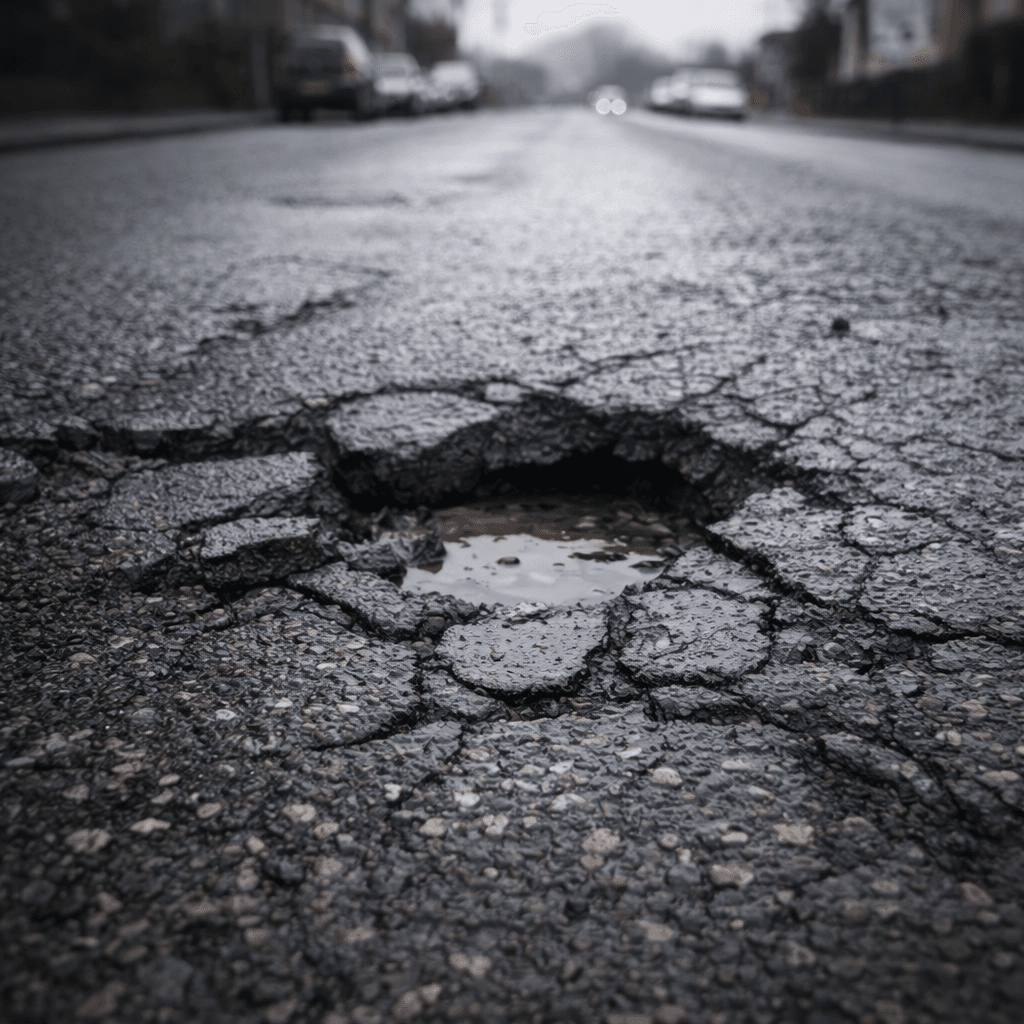
Northern Ireland’s pothole problem is no longer just something drivers complain about on social media. It is causing real damage, real disruption and real cost.
In recent months, the issue has become so serious that even a funeral limousine carrying bereaved relatives to Roselawn Crematorium suffered two flat tyres after hitting a pothole on the Ballygowan Road. The family had to walk the rest of the way.
That story struck a nerve because it showed just how disruptive poor road conditions can be when a journey really matters.
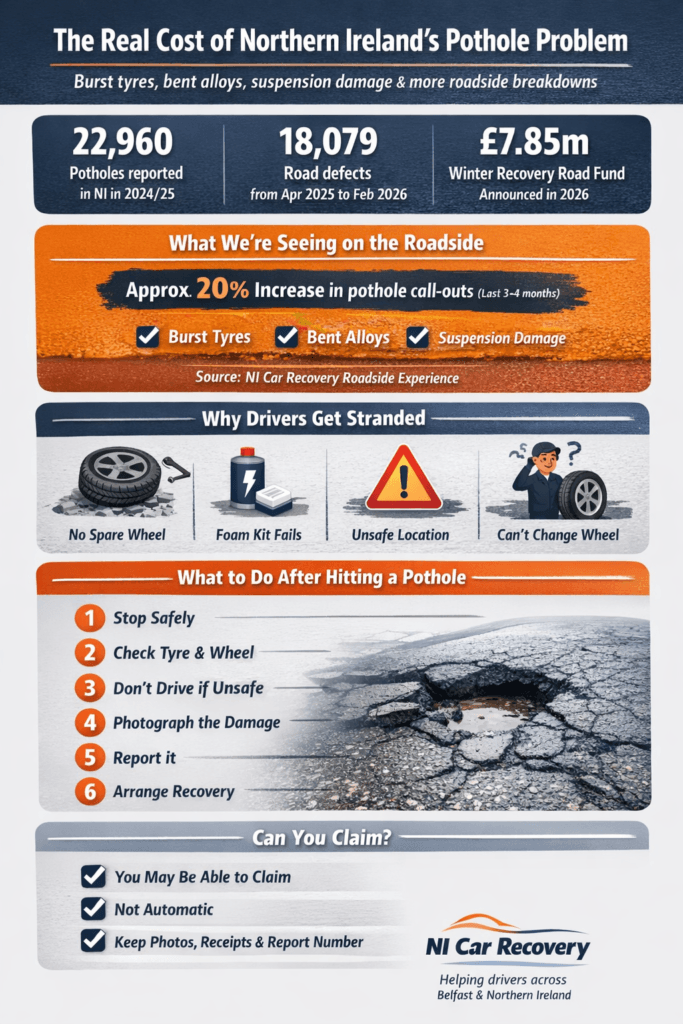
And this is not an isolated case. Belfast Telegraph reported that 22,960 potholes were reported in Northern Ireland during 2024/25, while more recent DfI-backed reporting said 18,079 road defects were reported between 1 April 2025 and February 2026.
The Department for Infrastructure has also announced extra roads funding this year, including a £7.85 million Winter Recovery Road Fund, and said total additional roads investment since December has risen to more than £40 million.
From our side at NI Car Recovery, we have seen the impact first-hand. Over the last 3 to 4 months, we would estimate roughly a 20% increase in roadside call-outs linked to pothole-type damage, especially burst tyres and suspected suspension problems.
That is not an official government figure. It is our on-the-ground view from attending breakdowns and roadside recovery jobs across Northern Ireland.
Why potholes are causing more breakdowns in Northern Ireland
Potholes do not just appear overnight for no reason.
The Department for Infrastructure says potholes and other surface defects are more likely at this time of year because water enters small cracks, freeze-thaw cycles expand the damage, and prolonged rain weakens the underlying structure of the road.
Flooding and poor drainage can make things worse again.
That matters because a pothole is not only a rough patch in the road. If the hole is deep enough, or if it is hit at the wrong angle or speed, the force can travel straight into the tyre, wheel and suspension.
In many cases, the driver hears a sudden bang, feels the car pull, and within seconds is left with a flat tyre or a vehicle that no longer feels safe to drive.
This is one reason pothole damage can catch drivers out. It often feels minor in the moment, but the actual damage can be much more serious than expected.
The most common pothole damage we are seeing
The most common pothole-related roadside issues we are seeing are:
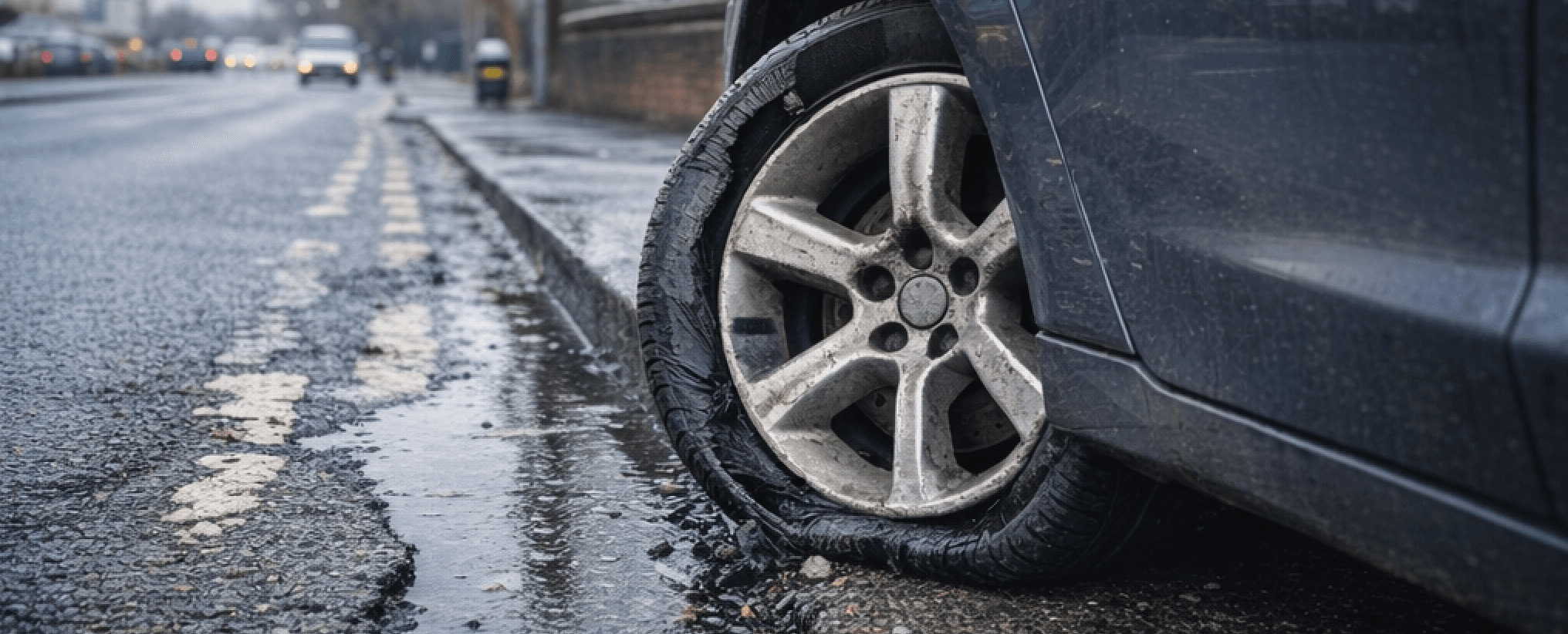
1. Burst tyres
This is the big one. Not a slow puncture — a proper split, tear or blowout. When that happens, the tyre is often beyond a simple roadside repair.
2. Bent or cracked alloys
A hard impact can deform the rim, which means even a replacement tyre may not hold air properly until the wheel itself is repaired or replaced.
3. Suspension damage
We are also seeing cases where drivers report knocking, clunking, poor steering feel, or the car sitting oddly after impact. That can point to suspension or steering damage and should not be ignored.
4. Vehicles stranded at the roadside
Even when the damage sounds simple, many drivers are still left stuck. They may not have the tools, may not feel safe changing a wheel on a busy road, or may discover the car does not even carry a spare.
Why modern cars make this worse
One of the biggest issues today is that many newer cars no longer come with a full-size spare wheel. Instead, they often come with a tyre inflator kit or foam sealant system.
That can help with a small puncture in the tread area, but it is often useless when the tyre has burst, split at the sidewall, or come off the rim after a pothole strike. If the tyre cannot hold pressure, the foam has nothing to seal against. In plain English: the kit that came with the car may be no help at all when the damage is serious.
That is why so many drivers who assume they are covered by the manufacturer’s puncture kit end up needing recovery anyway.
Not every driver can safely change a wheel at the roadside
There is also a real-world point that often gets missed in news coverage: not every driver is able, willing or safe to change a tyre at the roadside.
If someone is on a fast road, in bad weather, at night, on a narrow shoulder, or simply does not have the strength or confidence to do it, changing a wheel becomes unrealistic. Add in the fact that many cars no longer carry a spare, and a pothole impact turns into a recovery job very quickly.
That is why potholes are not just a “repair bill” issue. They are also a mobility and safety issue. Drivers are being left stranded.
Drivers who are unsure what to do next can also read our guide on how to change a tyre safely.
The cost does not stop with the driver
There is also a wider public cost. NI Direct says there is no automatic entitlement to compensation, but drivers can make a claim if they believe the Department for Infrastructure is responsible for damage caused by a road or street defect. Claimants are advised to report the defect, keep the reference number, and submit supporting evidence such as photographs and repair documents.
That process exists for a reason: poor road surfaces can and do cause costly vehicle damage. Belfast Telegraph has also reported major compensation totals in recent years, including an article stating NI drivers received £850,220 in one year for pothole-related vehicle damage, and another noting that more than £1 million had been paid over a three-year period.
So the cost of potholes runs in two directions:
- the driver pays through tyres, wheels, suspension damage and disruption,
- and the public purse can also be hit through repairs, claims and emergency road works.
What to do if you hit a pothole
If you hit a pothole and suspect damage, the safest thing is to avoid guessing.
Check for these warning signs:
- sudden tyre pressure loss
- steering pulling to one side
- vibration through the wheel
- a visible bulge, split or flat tyre
- loud knocking after impact
- the car not sitting level
- warning lights appearing after the strike
If any of those happen, do not assume you can just “nurse it home”. Driving further on a burst tyre or damaged suspension can make the damage worse and may leave you in a more dangerous position.
Can you claim for pothole damage in Northern Ireland?
Potentially, yes — but it is not automatic. NI Direct says each claim is investigated on its own facts. Drivers should report the pothole or defect, keep the reference number, take photographs where possible, and keep receipts or repair evidence. There is also an online process for making and tracking a roads-related compensation claim.
So if the damage is significant, it is worth documenting everything properly from the start.
When recovery is the better option
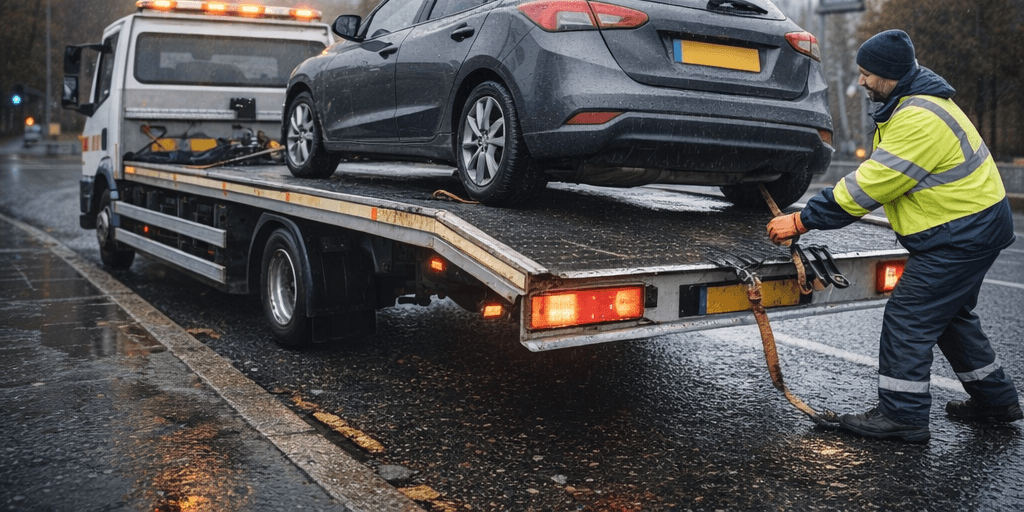
In our view, recovery is usually the safer option when:
- the tyre has burst rather than slowly punctured
- the wheel looks bent or cracked
- the car has no spare
- the vehicle is in an unsafe location
- there are signs of suspension or steering damage
- the driver does not feel confident changing a wheel at the roadside
This is especially true on busy roads, dual carriageways, dark rural stretches, or anywhere the vehicle is partly obstructing traffic.
The real cost of Northern Ireland’s pothole problem
The real cost of potholes is not just the hole in the road.
It is the missed appointments.
The disrupted school run.
The recovery call on a wet roadside.
The burst tyre that cannot be fixed with a foam kit.
The alloy that is bent beyond use.
The suspension problem that turns a short trip into a dangerous one.
And, as recent Northern Ireland headlines have shown, it can affect absolutely anyone at the worst possible time.
For drivers across Belfast and the rest of Northern Ireland, potholes have become more than an annoyance. They are now a genuine cause of roadside breakdowns.
If you have hit a pothole and your car is no longer safe to drive, the priority is simple: get yourself safe, get the vehicle checked properly, and do not rely on a repair kit if the tyre has fully burst.